Customer Intelligence
Why Does One Buyer Look Like Five People?
One customer, five systems, five different versions of her. Customer data integration is what turns those blind systems into one that can see, and getting it wrong breaks everything downstream.
- Published
- Author
- AccessFuel Team
- Reading time
- 4 min read
Because nothing in your stack is reconciling them.
One customer. Five systems. Five different versions of her.
She checked out as a guest in March. Subscribed to your list in June with a different address. Bought again in October through a Meta ad, then emailed support about the return. Shopify has one record. Klaviyo has another. Meta has a hashed identifier. Gorgias has a ticket. GA4 has a session that ties to none of them.
Every one of those systems is correct. Together they are wrong, because they describe four people who do not exist instead of one who does.
That is the problem customer data integration solves, and getting it wrong quietly breaks everything downstream.
What customer data integration means in practice
Customer data integration is the work of combining records from every system a customer touches into one profile per person. Data consolidation is the same idea described from the storage side. A single customer view is the output.
In ecommerce it usually means joining five or more sources:
- Store and order data: Shopify, checkout, subscriptions, returns
- Email and SMS: Klaviyo, Mailchimp, sends, opens, clicks
- Advertising: Meta, Google, TikTok, click and conversion events
- Behavioural: GA4, on-site sessions and product views
- Support and payments: Gorgias, Zendesk, Stripe
Most brands connect more than that. Thirty or more is a normal number once you count the tools nobody remembers signing up for.
Identity resolution is the part that is actually hard
Connecting sources is plumbing. Deciding that the guest checkout in March and the subscriber in June are the same human is the difficult bit, and it is called identity resolution.
Match on email alone and you lose every guest order. Match too loosely and you merge a household into one person, which inflates lifetime value and ruins your segments. Both failures look fine on a dashboard. Neither shows up until you send a campaign to a group that does not exist.
The reconciled output, the version of the record you trust, is the golden record. Everything above it inherits its quality.
Row level, not summary level
Here is the distinction that decides whether any of this is useful later.
Most tools give you a summary: totals, averages, a chart per metric. That is enough to report with and not enough to compute on. If your warehouse holds "customer had 14 orders," you can build a chart. If it holds all 14 orders with their line items, dates, discounts and channels, you can ask why the fourteenth was smaller than the third.
A store with 1.28 million rows unified at that level can answer questions nobody wrote a report for. The same store summarised into fifty metrics cannot.
Row level is also what makes AI answers trustworthy. Point a model at summaries and it will produce fluent, confident output from data that already lost the detail. The model is not lying. The input was already an abstraction.
Own the customer data warehouse
One structural question worth asking any vendor: when this contract ends, what do I keep?
If the unified data lives inside someone else's platform and leaves with them, you rented a view of your own business. If it lands in a customer data warehouse in your name, you keep the asset and the vendor becomes replaceable.
Every order, click and email in one place. Owned by you. That is not a slogan about trust, it is a question about who holds the table.
What good looks like when it is working
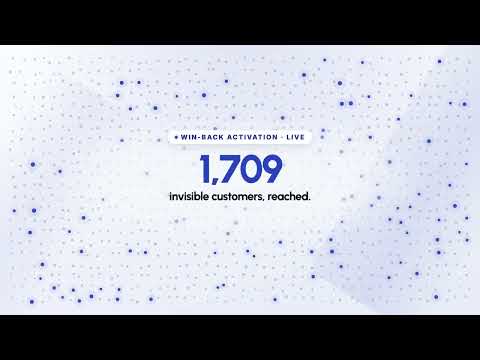
In the video above, a brand asks why repeat purchase dropped in its VIP segment. The answer comes back in one sentence: down 12%, because a 90-day win-back flow stopped sending on June 4, affecting 2,431 VIP customers.
That answer is only possible because Shopify order history, Klaviyo send logs and customer records were joined at the row level. No single system in that stack could have found it. Shopify does not know the flow stopped. Klaviyo does not know what it cost.
Integration is what turns two blind systems into one that can see.
When you don’t need this yet
If you run one store, one email tool and nothing else, you do not have an integration problem. You have two systems and a CSV, and a warehouse would be overhead.
The threshold is roughly four connected sources, or the first time you find two tools reporting different revenue for the same week and cannot say which is right. Before that, fix the tools. After that, unify.
What to do next
Connect your data sources, watch the rows join, and ask AIRA one question about your VIP segment. That takes about ten minutes and tells you more than a stack audit will.
Get started for free at accessfuel.com
Related posts
Keep Exploring
Discover more insights, strategies, and updates from AccessFuel.

4 min read
Customer IntelligenceCustomer Intelligence: Why Can't 30 Tools Answer One Simple Question?
Most ecommerce brands run 30 or more tools and still cannot say why repeat purchases dropped last month. Customer intelligence is the layer that closes the gap between them.
5 min read
Customer IntelligenceCustomer Segmentation: Which of Your Loyalists Are About to Leave?
About one in five of your loyal customers are quietly slowing down. Shopify can confirm they exist. It will not tell you which ones are worth saving. RFM segmentation does.
3 min read
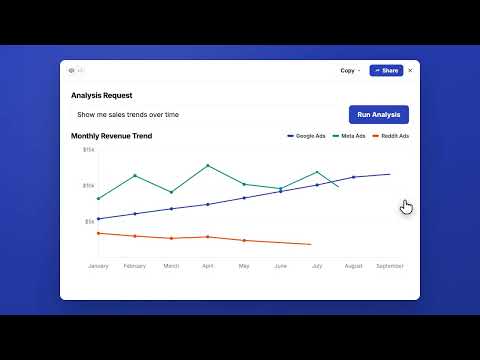
Product UpdatesEverything AIRA creates Is Shareable. Here's What That Looks Like.
Good work has a distribution problem. The analysis lives in your tab. The persona lives in a deck. The report lives in a PDF named "final_v4." By the time it reaches your team, it's a screenshot of a screenshot — flat,…