Customer Intelligence
Customer Intelligence: Why Can't 30 Tools Answer One Simple Question?
Most ecommerce brands run 30 or more tools and still cannot say why repeat purchases dropped last month. Customer intelligence is the layer that closes the gap between them.
- Published
- Author
- AccessFuel Team
- Reading time
- 4 min read
Because not one of them can see the other twenty-nine.
Most ecommerce brands run 30 or more tools and still cannot say why repeat purchases dropped last month. The data exists. It sits in Shopify, Klaviyo, Meta, GA4, Stripe, Gorgias and two dozen more, and every one of them answers its own question well. Then the question you actually have falls into the gap between them: why did this happen, and who do I move?
Customer intelligence is the layer that closes that gap.
What is customer intelligence?
Customer intelligence is the practice of joining every interaction a customer has with your brand into one record, then computing on that record to answer questions about behaviour, value and intent.
Two halves, and both are required.
The first is the join. Every order, click, email, return and support ticket, stitched at the row level so one shopper who checked out as a guest, subscribed with a second address and bought again in store is recognised as one person.
The second is the computation. Not a chart of what happened, but an answer to why it happened and what to do next, with the working shown.
A tool that does the first and not the second is a data warehouse. A tool that claims the second without the first is guessing.
Customer intelligence vs analytics, BI and attribution
These categories overlap enough to be confusing, so here is the honest separation.
| Category | The question it answers | Where it stops |
|---|---|---|
| Ecommerce analytics | What happened? | Cannot say why, or who |
| Attribution | Which ad or channel got credit? | Says nothing about the customer |
| Business intelligence | How do I chart it? | Needs an analyst to ask the question |
| Customer intelligence | Why did it happen, and who do I move? | Needs your first-party data to be complete |
Attribution tools are good at what they do. If your only question is which campaign earned the sale, a measurement platform will answer it faster than we will. The limit is that it never tells you who your customers are, why they left, or what to send them. It also assumes you already have both a media budget and someone to interrogate a dashboard.
Most brands under $15M have neither.
What a customer intelligence platform actually does
Four jobs, running on one warehouse.
Unify. 30+ data sources joined at the row level into one warehouse, owned by you. Not a summary. Not a black box you rent access to.
Analyse. Ask why repeat purchase fell in your VIP segment and get the answer, the chart and the cited source, computed across every order you have ever had rather than a sample.
Watch. A sweep runs around the clock and surfaces what changed before you thought to ask. A margin drop at 05:12 is on your screen at 09:00.
Activate. The finding becomes a persona and syncs to Klaviyo, Meta or Google in one move. An answer you cannot act on is trivia.
Audience intelligence and where personas fit
Audience intelligence is the adjacent term you will see used for the same territory, usually by tools that stop at describing a group rather than building one you can send to.
In AccessFuel the output is a persona: a computed cluster of real buyers with their behaviour, their value and their motivation attached, generated from your own order history rather than a purchased dossier on strangers. That distinction is the point. Bought data describes people who have never heard of you. Your own history describes people who already paid you.
What you need before this works
Customer intelligence is only as good as the history underneath it, so there is a floor.
You need at least a year of order data and a store doing meaningful repeat volume. Below that there is not enough behaviour to compute against, and any platform promising otherwise is producing confident output from thin input.
If you are pre-launch or in your first season, connect your sources now and let history accumulate. Do not buy an intelligence layer to interpret four months of data.
Watch AIRA work for you
The video above shows the full path: the question nobody can answer, the scattered tools collapsing into one warehouse, four specialists assembling on top, the answer with receipts, and the overnight sweep that keeps working after you log off.
Get started for free today and watch AIRA answer questions against your live data, then turn the answers into a AccessFueled personas.
Related posts
Keep Exploring
Discover more insights, strategies, and updates from AccessFuel.
5 min read
Customer IntelligenceCustomer Segmentation: Which of Your Loyalists Are About to Leave?
About one in five of your loyal customers are quietly slowing down. Shopify can confirm they exist. It will not tell you which ones are worth saving. RFM segmentation does.
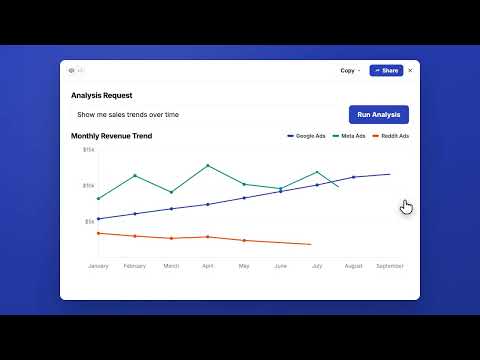
3 min read
Product UpdatesEverything AIRA creates Is Shareable. Here's What That Looks Like.
Good work has a distribution problem. The analysis lives in your tab. The persona lives in a deck. The report lives in a PDF named "final_v4." By the time it reaches your team, it's a screenshot of a screenshot — flat,…
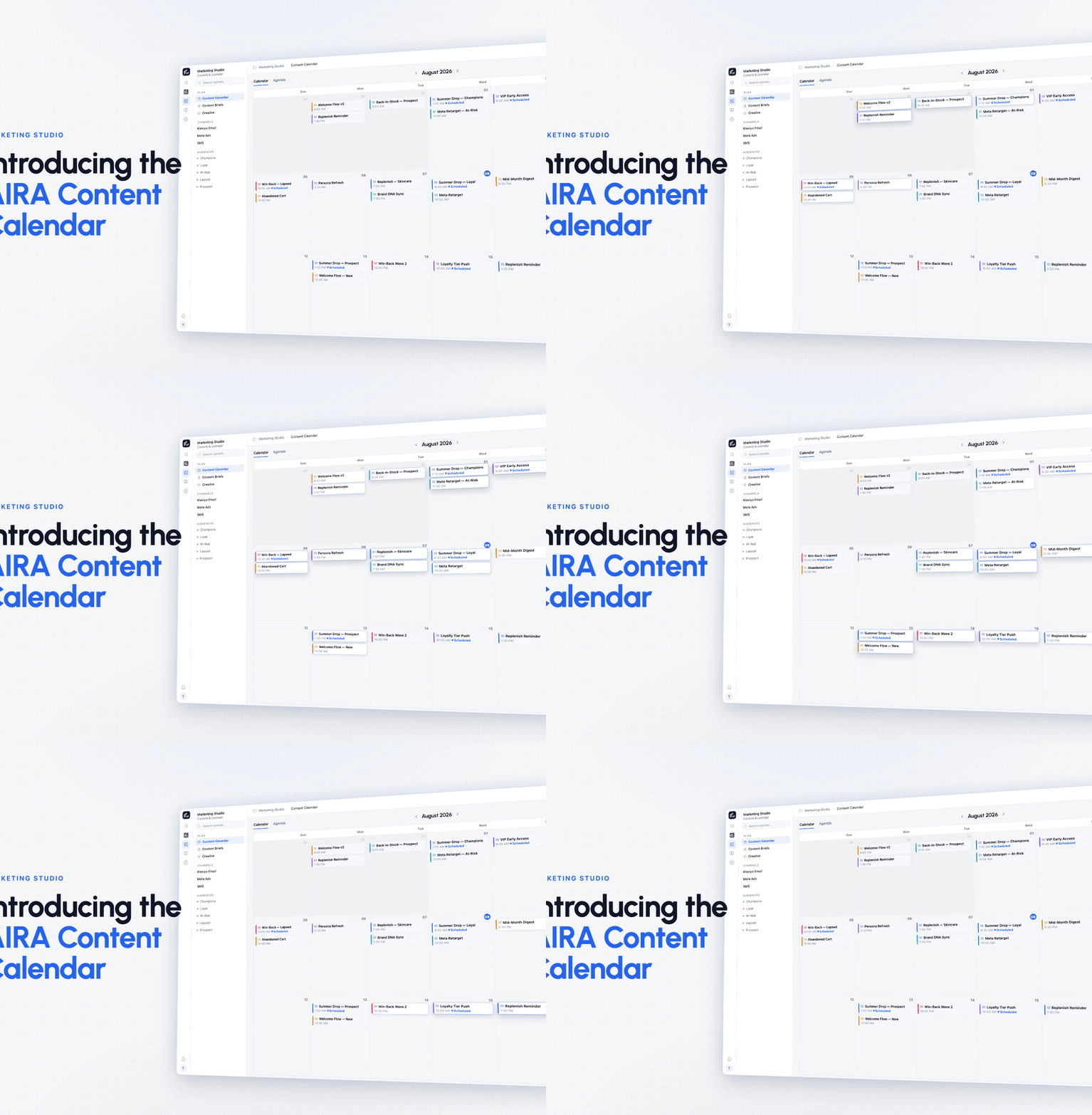
4 min read
Marketing StrategyYour Content Calendar Now Runs Itself
TLDR: AIRA now runs your whole content journey — find the audience, generate posts and emails for every channel, and route it all through an approval Queue, Board, and Calendar. Nothing publishes without your sign-off.