Data & Analytics
What KPIs Actually Matter for Ecomm in Q3, and Which Ones Are Distracting You
Nobody writes a LinkedIn victory lap about July. The screenshots come later. The Black Friday revenue counter. The “biggest day in company history” post. The confetti. But by the time that counter starts climbing, most…
- Published
- Author
- AccessFuel Team
- Reading time
- 10 min read
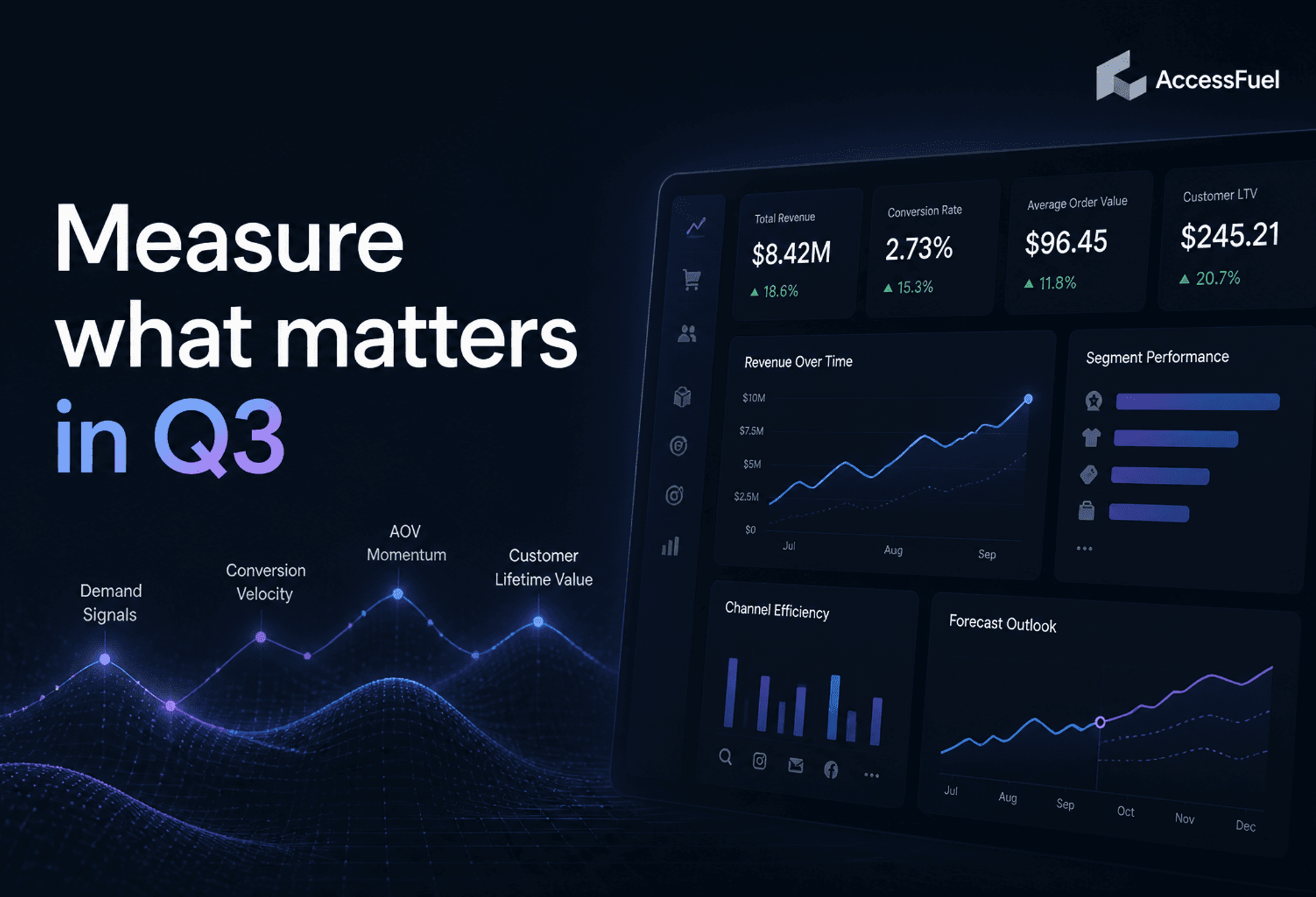
Nobody writes a LinkedIn victory lap about July.
The screenshots come later. The Black Friday revenue counter. The “biggest day in company history” post. The confetti. But by the time that counter starts climbing, most of the outcome has already been decided.
Q4 usually isn’t won by the brand that discounts the hardest in the final week. It’s won by the brand that spent Q3 fixing the things you can’t fix under pressure: margin math, customer retention, inventory planning, owned-channel performance, site speed, and the flows that quietly do most of the selling.
That’s what makes Q3 so important, and also so easy to misread.
A lot of ecommerce teams walk into summer staring at dashboards that look healthy on the surface. Traffic is up. Impressions are up. ROAS looks decent. Top-line revenue feels fine.
Then December closes, the P&L lands, and the story changes.
The problem usually isn’t that the team wasn’t data-driven. It’s that they were watching the wrong scoreboard.
Q3 is the quarter where signal matters most. Not noise. Not screenshots. Not numbers that feel good in a meeting. The metrics that predict a strong Q4 are often quieter, harder to compute, and much less glamorous.
They’re also the ones that tell the truth.
Peak season is a measurement problem before it’s a sales problem
Q3 has a specific job. It’s the proving quarter.
Back-to-school demand no longer lives in a neat late-August window. It now spreads across June, July, August, and into September, creating multiple moments where brands can acquire, retain, convert, and learn. Q3 ecommerce volume is meaningful on its own, but its bigger value is what it reveals before Q4 auction pressure, operational strain, and discount noise hit all at once.
That’s the mental model: Q3 is when you collect the signal. Q4 is when you pay for what you missed.
If you use Q3 to chase surface-level growth, you can walk into peak season with a false sense of confidence. If you use it to test unit economics, retention, stock readiness, site performance, and owned-channel strength, you walk into Q4 knowing what can scale and what needs to stay off the gas. That difference matters.
A vanity metric in a slow quarter is annoying. A vanity metric guiding peak-season spend can get expensive fast.
The one-question test for every KPI
You don’t need a complicated framework to clean up your dashboard.
You need one question: If this number doubled overnight, would I know exactly what to do next?
If the answer is “nice,” it’s probably a distraction.
If the answer is “we know which lever moved, which customer behavior changed, and what action to take,” you’re looking at a KPI.
Notice the difference?
Vanity metrics describe activity. Useful KPIs guide decisions.
Hold every number on your Q3 dashboard up to that standard and the list gets shorter quickly.
The distraction metrics that feel like winning
To be clear, these numbers aren’t useless. They can be helpful context. The danger is treating them like goals.
1. Raw traffic and sessions
Traffic tells you attention arrived. It doesn’t tell you whether the attention was valuable.
2. Impressions and reach
Impressions measure how often you showed up. They don’t measure whether anyone cared.
3. Platform-reported ROAS
This is the most seductive one because it looks like a profit metric. It isn’t.
Each platform has an incentive to claim credit for revenue, including revenue that may have happened anyway. Since privacy changes reshaped attribution, platform ROAS has become less reliable as a standalone decision-maker.
A strong platform ROAS can still hide weak incrementality. It can also make paid media look healthier than it really is.
If you can’t connect ROAS to incremental growth and contribution margin, it’s not the full story.
4. Top-line revenue or GMV
Revenue is only useful when you know what it cost to create.
5. Blended CAC
Blended CAC is comfortable because it averages everything together.
That’s also the problem.
It mixes expensive new customers with returning customers who may have purchased again anyway. The result can make acquisition look more efficient than it actually is.
In Q3, separate new-customer CAC from blended CAC. If you’re scaling into Q4, you need to know the honest cost of bringing in net-new customers.
6. Email open rates
Open rates became much less useful after Apple Mail Privacy Protection inflated opens through image pre-loading.
An open is now a weak proxy for attention. Clicks, conversion, revenue, and repeat purchase behavior tell you much more.
The KPIs that matter answer, “Did something profitable happen, and will it happen again?”
The KPIs that actually matter in Q3
There are four truths every ecommerce brand should know before Q4.
Truth 1: Profit. Are your unit economics real?
Contribution margin
If you add one metric to the wall this quarter, make it contribution margin.
Contribution margin shows what’s left after variable costs like COGS, shipping, fulfillment, payment fees, returns, and paid media. It’s the number that turns “we had a great revenue day” into “we know what we actually made.”
This matters because gross margin can flatter you. ROAS can distract you. Contribution margin forces the real conversation.
In Q3, use it to identify which products can handle Q4 spend and which ones shouldn’t be pushed with heavy discounts or aggressive acquisition.
New-customer CAC and aMER
New-customer CAC is the honest version of acquisition cost because it strips out repeat buyers. It tells you what it actually costs to add a customer, not just generate an order.
Pair that with aMER, which looks at new-customer revenue against paid spend. When MER looks fine but aMER weakens, there’s a good chance repeat customers are propping up paid media performance.
Better to learn that in July than during the Q4 auction.
Truth 2: Customer. Will they come back?
LTV:CAC and payback period
A healthy LTV:CAC ratio is still one of the clearest signs of sustainable growth. For many DTC brands, a rough target is around 3:1, with a practical range of 2:1 to 4:1 depending on category, margin, and purchase cycle.
But the ratio isn’t enough on its own.
Timing matters. If payback takes too long, the business can feel healthy on paper while cash gets tight in reality.
Q3 is when you pressure-test whether the customers you’re acquiring can pay back quickly enough before Q4 spend accelerates.
Cohort retention and repeat-purchase rate
Aggregate retention can hide the truth. Cohorts reveal it.
Group customers by the month they first purchased, then track how they behave at 30, 60, 90, and 365 days. Are July customers better than last July’s? Are customers from one channel coming back faster than another? Are discount-heavy cohorts decaying faster?
Those answers matter more than a blended retention average.
If Q3 acquisition cohorts are leaking faster than last year’s, Q4 volume won’t fix it. It’ll just scale the leak.
Post-purchase retention plan
Retention doesn’t start in January. It gets designed in Q3.
The customers you acquire during Black Friday and Cyber Monday need a post-purchase plan before they ever place the order. That means segmenting discount hunters from loyal-potential customers, building relevant follow-up flows, referencing the original purchase, and preparing a January reactivation plan before the calendar gets chaotic.
Peak season acquisition without a retention plan is expensive sampling.
Truth 3: Readiness. Can the machine take the weight?
Inventory sell-through
Q3 is when many Q4 inventory decisions get locked.
Sell-through tells you what demand is actually doing, especially when indexed against two or three years of seasonality. Flat Q3 demand doesn’t always mean flat Q4 demand, especially for gifting-heavy categories.
Use Q3 sell-through to spot winners early, avoid overbuying slow movers, and protect cash from getting trapped in the wrong stock.
Site performance and Core Web Vitals
Site speed isn’t glamorous. It’s just expensive when ignored.
A slow site taxes every channel. Paid traffic converts worse. Email traffic leaks. Mobile shoppers bounce. Under Q4 load, small performance issues can become revenue issues.
The audit belongs in July, not the week before Black Friday.
Owned-channel revenue share
Email, SMS, and other owned channels are the revenue sources you don’t rent from an ad auction.
For mature DTC brands, owned-channel revenue often sits in the 20% to 30% range. If you’re well below that, you may be too dependent on paid media right when paid media gets most expensive.
Q3 is the time to clean up your flows, test offers, improve segmentation, and make sure your owned channels can carry more weight when acquisition costs rise.
Truth 4: The new frontier. Are you visible to the robots?
This is the KPI category most Q3 dashboards still miss.
Shopping discovery is moving into AI-powered experiences. More consumers are using generative AI to research products, compare options, and make purchase decisions. In those environments, the classic funnel gets harder to see. There may be no traditional search result, no clean pageview, and no obvious last click.
That creates a new measurement problem.
Brands need to start tracking whether they show up in AI-assisted recommendations, how they’re described, whether competitors are being favored, and whether AI-referred traffic converts differently.
The metrics are still emerging, but the questions are already here:
- Does your product show up at all?
- Are you the recommended option or a footnote?
- How often are competitors mentioned instead?
- Does AI-referred traffic behave like high-intent traffic?
You don’t need perfect measurement overnight. But Q3 is the right time to start baselining visibility.
Finding out in December that your brand is invisible in a growing discovery layer is not a fun surprise.
A quick Q3 benchmark cheat sheet
Use these as directional reference points, not universal grades. Category, margin profile, price point, and purchase frequency all matter.
| KPI | Healthy directional benchmark | What it tells you |
|---|---|---|
| Contribution margin | Green above 30%, watch 20% to 30%, red below 20% | Whether you make money per order |
| LTV:CAC | Around 3:1, with many DTC brands in the 2:1 to 4:1 range | Whether growth is sustainable |
| Repeat-purchase rate | 25% to 30% average, higher for consumables | Whether customers come back |
| New-customer CAC | Track against blended CAC | The honest cost of scaling |
| Owned-channel revenue share | Roughly 20% to 30% | How dependent you are on paid media |
| Core Web Vitals | Pass all three | Whether the site can handle peak load |
| Inventory sell-through | Indexed against 2 to 3 years of seasonality | Whether Q4 stock is right-sized |
What to actually put on the wall
Retire the traffic-and-impressions dashboard for the summer.
Replace it with a weekly Q3 scoreboard that answers three questions.
1. Are we making money?
Track contribution margin, new-customer CAC, aMER, and margin by SKU.
2. Are these customers keepers?
Track cohort retention, repeat-purchase rate, payback period, and post-purchase flow performance.
3. Can we take the weight?
Track sell-through against forecast, Core Web Vitals, owned-channel revenue share, and AI visibility baselines.
If a metric doesn’t help answer one of those questions, run the doubling test again.
If your only reaction is “nice,” it probably doesn’t belong on the Q3 wall.
A KPI is only as honest as the data beneath it
Here’s the part that quietly breaks most dashboards.
Contribution margin needs COGS, shipping, fees, returns, and ad spend in one view. Cohort retention needs clean order history connected to acquisition source. New-customer CAC needs a reliable way to separate first-time buyers from returning customers. Owned-channel revenue needs email, SMS, and commerce data working together.
That’s why so many teams fall back on platform ROAS, traffic, and top-line sales. Not because they prefer shallow metrics, but because the honest metrics are scattered across Shopify, Klaviyo, Meta, GA4, and the rest of the stack.
AccessFuel was built to close that gap.
When your customer, commerce, marketing, and performance data live in one governed environment, the metrics that matter stop being a quarterly reconciliation project. They become questions your team can ask and act on.
AIRA, your Strategic Intelligence Partner, helps turn those questions into answers, audiences, campaigns, and reports using your brand’s own data. That’s the AccessFuel loop:
THINK: understand what’s happening across the customer lifecycle.
CREATE: turn insight into segments, reports, and campaign-ready outputs.
ACTIVATE: move from strategy to execution at brand speed.
Q3 doesn’t need more dashboards. It needs a better scoreboard.
The metrics that decide your Q4 are rarely the loudest ones. They’re the ones that tell you whether growth is profitable, customers are coming back, inventory is ready, owned channels can perform, and your brand is visible where discovery is moving next.
Spend the quiet quarter measuring what’s real.
Q4 is watching.
Related posts
Keep Exploring
Discover more insights, strategies, and updates from AccessFuel.
4 min read
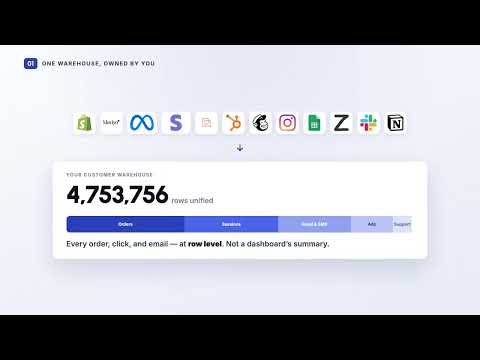
Data & AnalyticsIs Ecommerce Analytics Consulting Worth It, or Are You Buying a Deck That Goes Stale?
Consulting is worth it when the work is genuinely one-time, and stops being worth it the moment you need the same answer next month. An honest three-way comparison.
4 min read
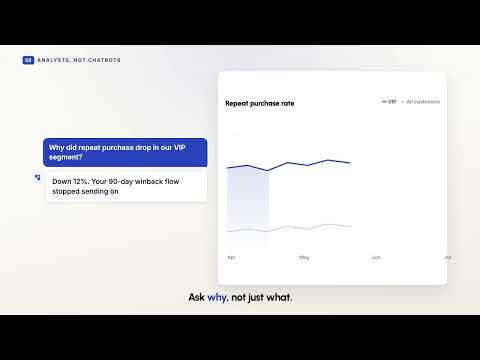
Customer IntelligenceWhy Does One Buyer Look Like Five People?
One customer, five systems, five different versions of her. Customer data integration is what turns those blind systems into one that can see, and getting it wrong breaks everything downstream.

4 min read
Customer IntelligenceCustomer Intelligence: Why Can't 30 Tools Answer One Simple Question?
Most ecommerce brands run 30 or more tools and still cannot say why repeat purchases dropped last month. Customer intelligence is the layer that closes the gap between them.