Product Updates
5 Things You Can Only Do With AccessFuel
Sure... most "AI tools" can answer questions. Some dashboards can show you what changed. A few platforms can help you build segments or generate content. We decided to build something different. Something that brings…
- Published
- Author
- AccessFuel Team
- Reading time
- 7 min read
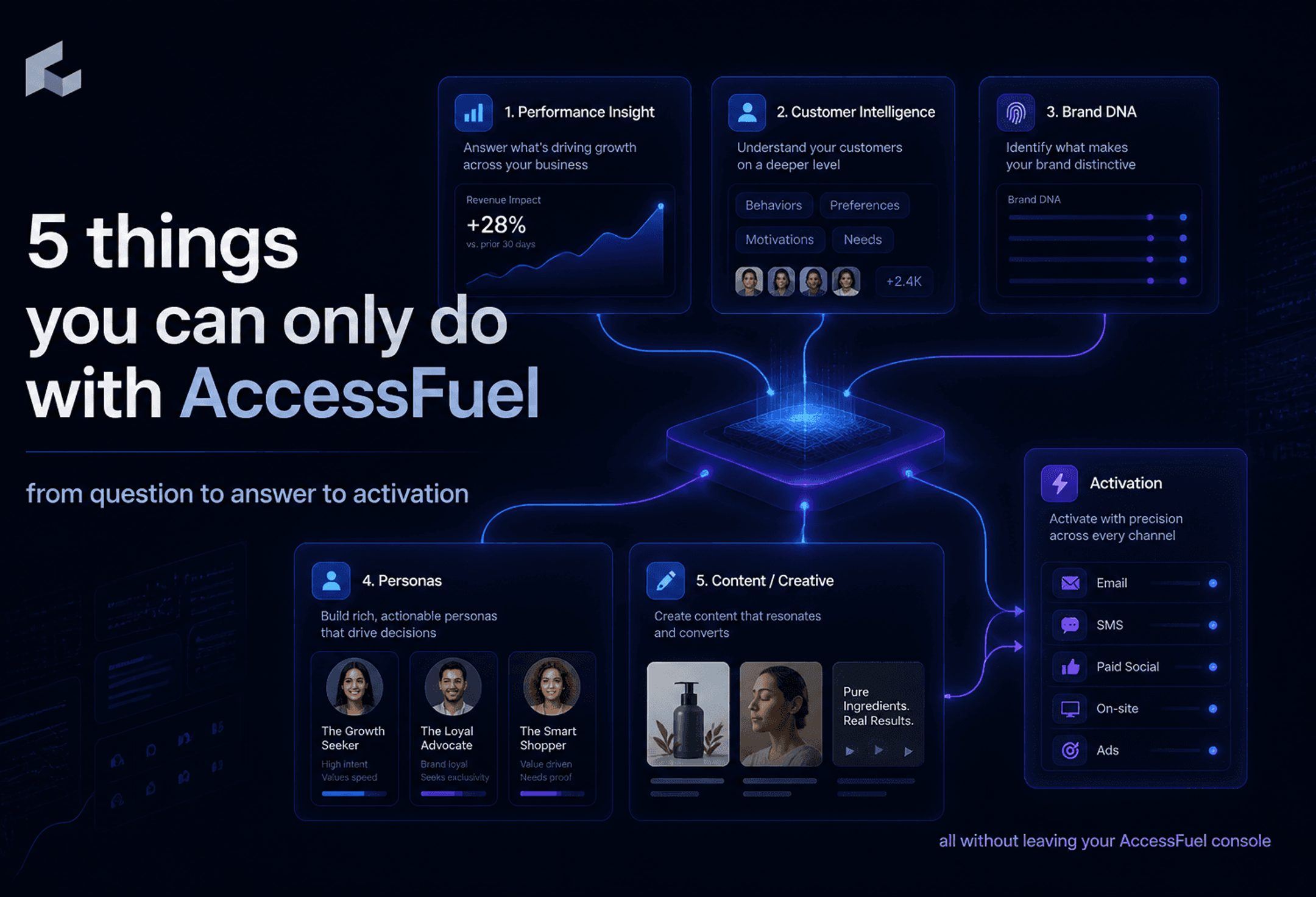
Sure... most "AI tools" can answer questions. Some dashboards can show you what changed. A few platforms can help you build segments or generate content.
We decided to build something different. Something that brings the full growth workflow into one intelligence layer: performance data, customer intelligence, Brand DNA, personas, strategy, content, creative, and activation. All in one place.
That means teams don't just move faster. They move with context. They understand the why behind performance shifts, meet the real people behind the numbers, create on-brand outputs automatically, and turn insights into launch-ready work without bouncing between tools.
This is what makes AccessFuel more than a database or chat assistant. It's an AI-native Growth Operating System built for teams that need clarity, precision, and measurable outcomes.
Your growth team is drowning in tools.
One tool for analytics. Another for customer data. Another for creative. Another for reporting. Another for campaign planning. Another tab open because someone still needs to ask, “Wait, why did this happen?”
The problem isn't that teams don't have enough software.
It's that most software stops at one piece of the work.
Dashboards show what happened. AI tools generate content. CDPs organize customer records. BI tools create reports. But the actual growth work lives in the space between those things: interpreting performance, understanding customers, deciding what to do next, and launching the right action quickly.
That's where AccessFuel is different.
We bring your commerce, marketing, analytics, customer, brand, and campaign intelligence into one consolidated Golden Database. AIRA sits on top of that intelligence layer so your team can ask better questions, get sharper answers, and move from insight to execution without losing context along the way.
Here are five things you can only do with AccessFuel.
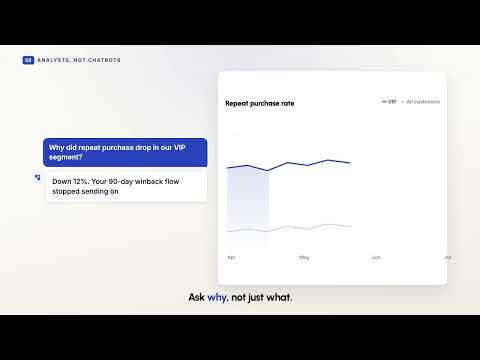
1. Understand why performance is shifting, not just that it shifted
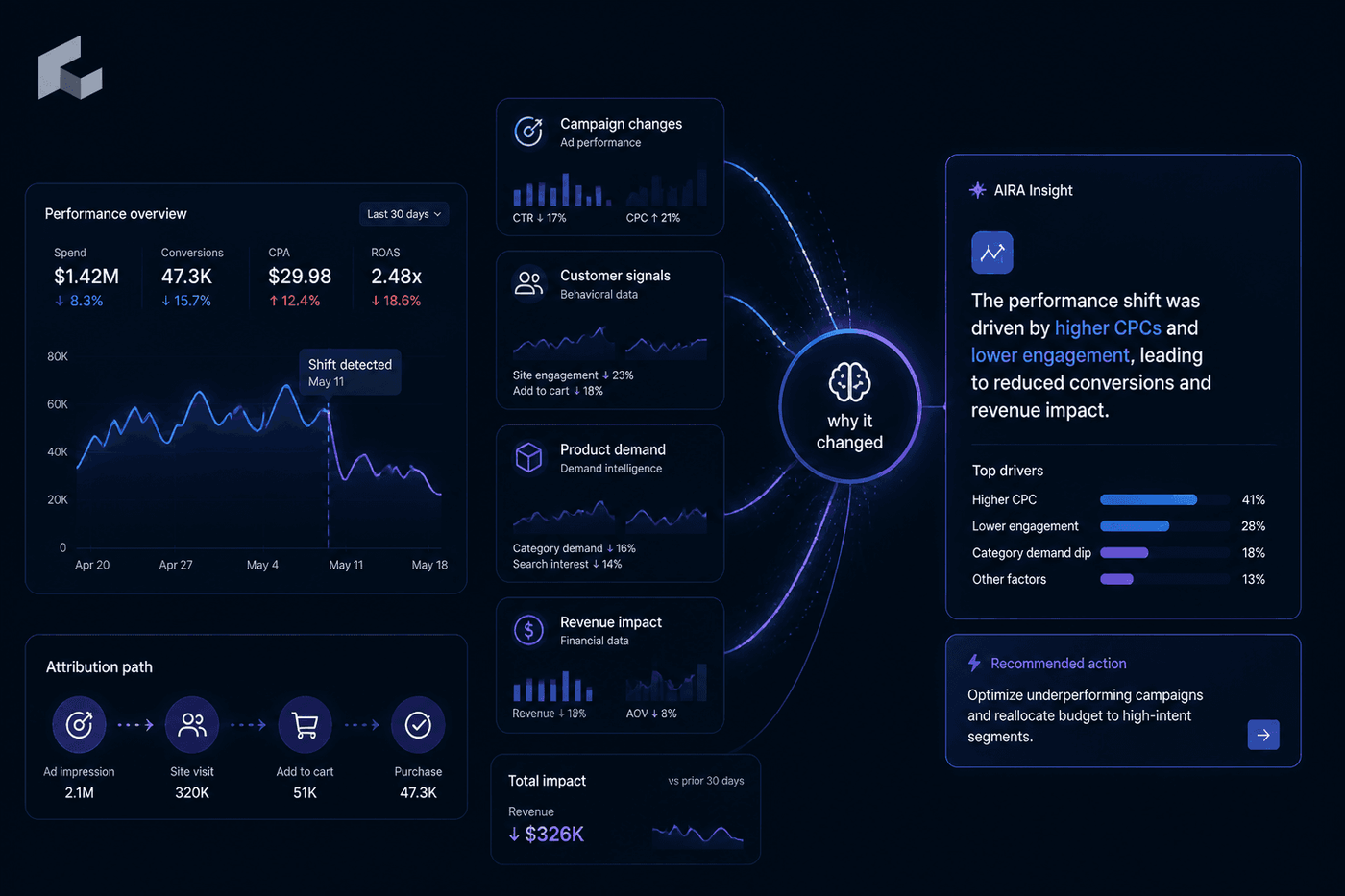
Most platforms are great at telling you something changed.
Revenue is down. AOV moved. CAC climbed. Email performance softened. A customer segment stopped converting. A product started overperforming.
Useful? Sure.
Enough? Not really.
Operators don't just need alerts. They need interpretation.
With AccessFuel, AIRA can analyze connected performance data and help explain what is driving the shift. Instead of stopping at “AOV dropped 12%,” your team can ask why it happened, what customer behavior changed, which products or segments contributed, and what actions are worth testing next.
That unlocks a better operating rhythm.
You spend less time pulling reports and more time making decisions. You catch issues earlier. You stop guessing whether the problem is channel mix, offer strategy, customer quality, merchandising, retention, or something else entirely.
The business impact: faster diagnosis, cleaner prioritization, and fewer expensive decisions made from surface-level metrics.
2. Meet the real people behind your brand, not just their data points

A customer profile shouldn't feel like a spreadsheet in a trench coat.
Yet that is how most brands are forced to understand their audience: demographics, purchase history, RFM scores, LTV, cohorts, segments, and maybe a few behavioral tags.
Those are important data points, but they don't tell the full story.
AccessFuel turns real customer and purchase behavior into richer customer intelligence. AIRA can help generate personas that go beyond basic segmentation, including motivations, barriers, messaging angles, emotional drivers, StoryBrand-style narratives, and personality-informed insights.
That matters because growth teams don't market to rows of data. They market to people.
When your team understands what customers value, what they hesitate over, what language resonates, and what journey they are really on, your campaigns become more relevant. Your offers become sharper. Your creative briefs get better. Your retention strategy gets more human.
The business impact: stronger customer understanding, more precise messaging, and campaigns that feel like they were built for the people most likely to buy.
3. Ensure every output is on-brand automatically
Generic AI output is easy to spot.
It sounds polished, but not specific. Clean, but not differentiated. Fast, but not necessarily usable.
For growth teams, that creates a hidden cost. You get a draft quickly, then spend the next hour making it sound like your brand.
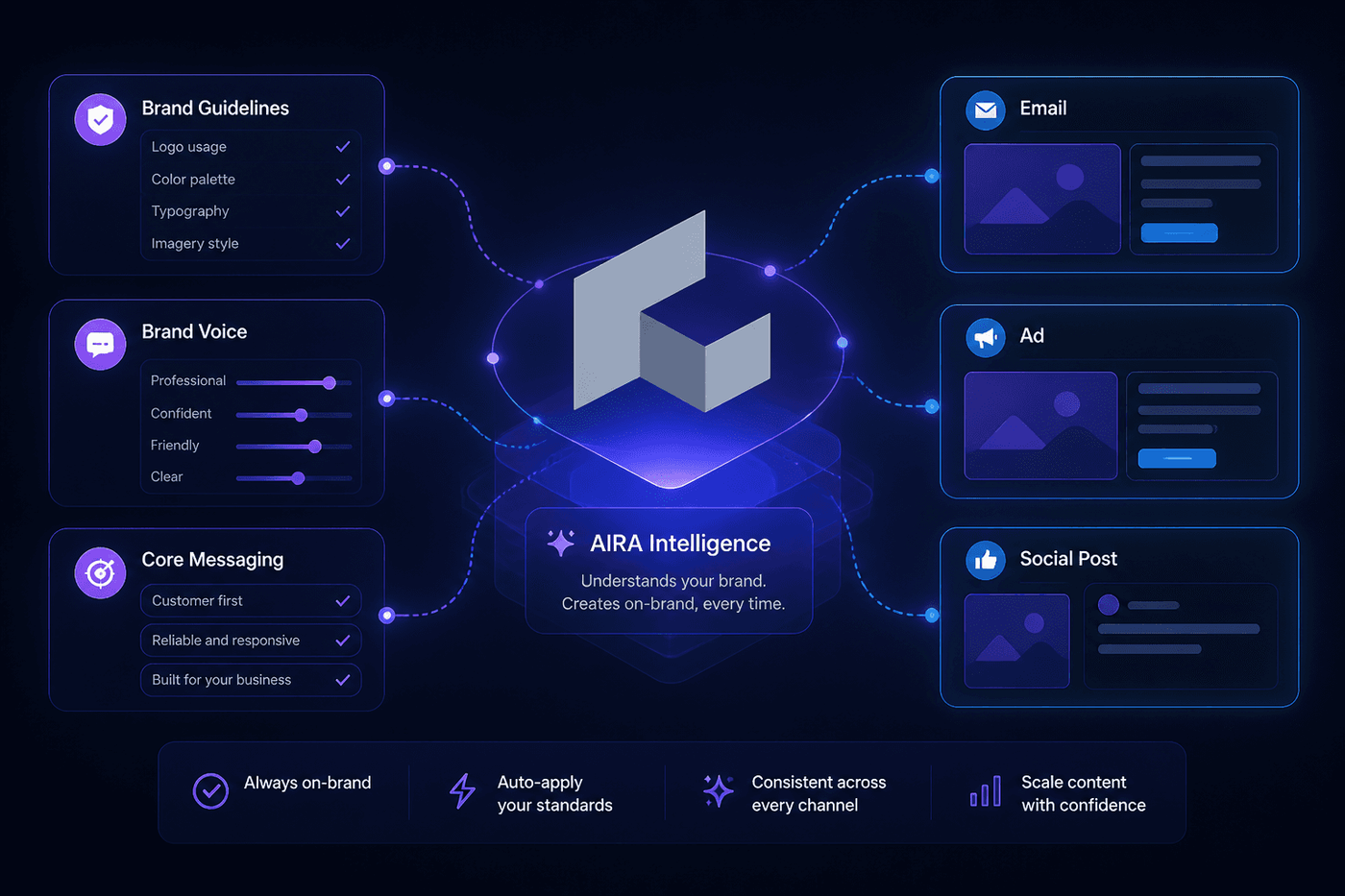
AccessFuel solves that with Brand DNA.
Your Brand DNA acts as a living intelligence layer for voice, tone, vocabulary, positioning, audience, values, and messaging standards. AIRA uses that context to keep outputs aligned automatically, whether you're creating campaign copy, customer messaging, content briefs, reports, strategy notes, or launch assets.
For multi-brand teams, that means every label can maintain its own distinct voice without rebuilding the context every time.
This is a major difference between using AI as a blank text generator and using AI inside a console that understands your brand, your customers, and your business goals.
The business impact: faster content creation, fewer revision cycles, stronger brand consistency, and more confidence that AI-generated work is actually ready to use.
4. Go from consumer insight to launch-ready execution in minutes, not weeks

The slowest part of growth isn't always the idea. It's the handoff.
Insight becomes a Slack thread. The Slack thread becomes a meeting. The meeting becomes a brief. The brief waits for copy. Copy waits for creative. Creative waits for approvals. By the time the campaign is ready, the original opportunity may already be stale.
AccessFuel compresses that workflow.
Inside the console, your team can ask a business question, understand the customer or performance insight, build an audience direction, generate on-brand campaign copy, create supporting visuals, and turn the idea into something much closer to launch-ready execution.
That's the real unlock: not just faster AI answers, but a tighter path from question to answer to activation.
When insight and execution live in the same environment, teams can test faster. They can respond to performance shifts faster. They can turn customer intelligence into campaigns while the insight is still fresh.
The business impact: shorter campaign cycles, faster testing velocity, and more opportunities captured before they disappear.
5. One intelligence layer across every division, every team, instantly
Most companies don't have one version of the truth.
Marketing has its view. Ecommerce has another. Paid media has another. Retention has another. Leadership gets a summary. Creative gets a brief. Agencies get partial context. Everyone is working from a slightly different version of the same business.
AccessFuel changes that.
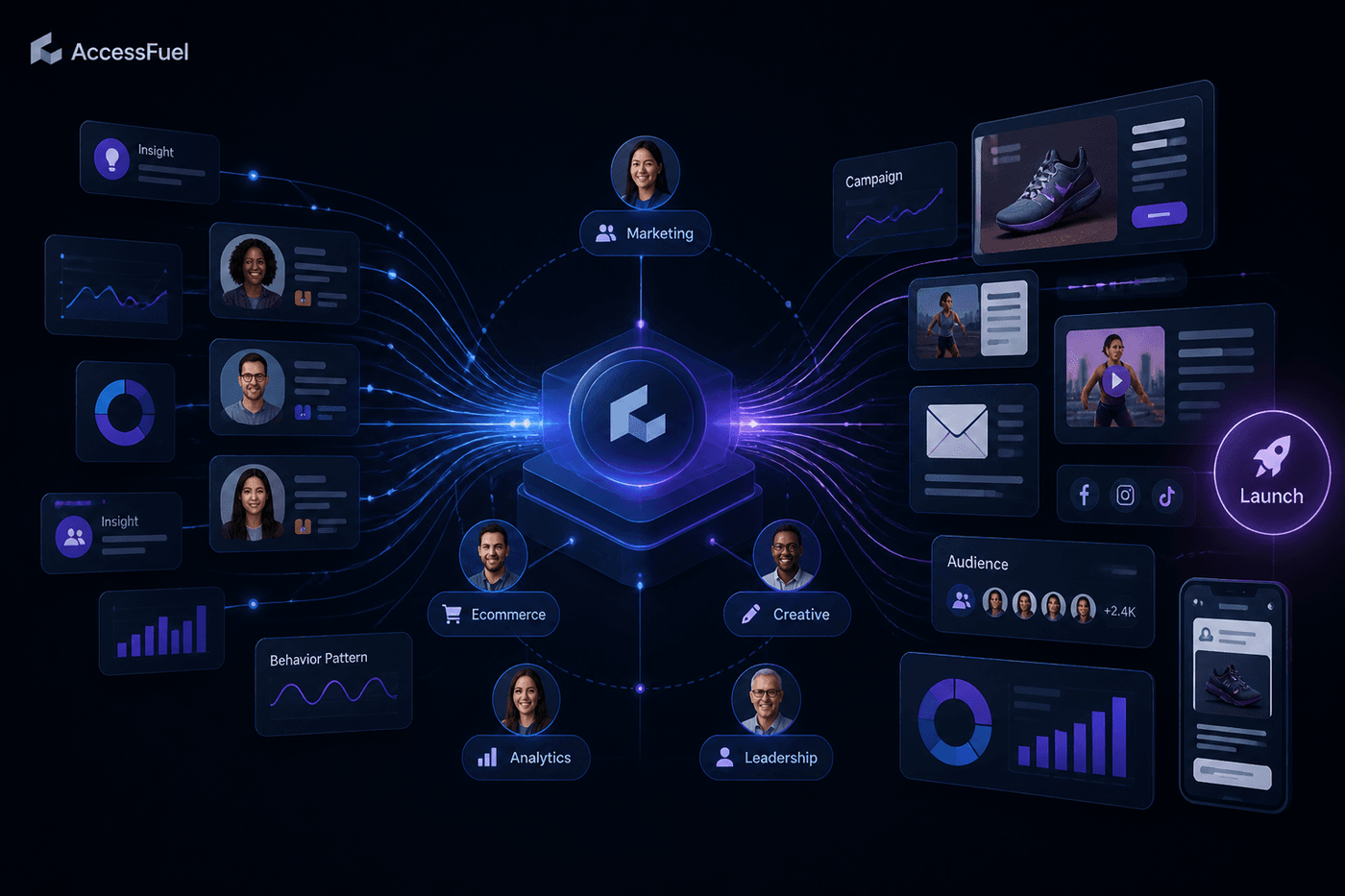
By connecting commerce, email, paid media, analytics, customer intelligence, Brand DNA, personas, playbooks, and AIRA into one operating layer, teams can work from shared context.
That means a growth marketer can ask about campaign performance. A retention lead can identify high-value segments. A creative team can generate brand-aligned messaging. A leadership team can get a clearer read on what is happening and why. An agency team can build better client deliverables without waiting three days for an analyst pull.
Everyone gets closer to the same intelligence, in plain language, when they need it.
The business impact: fewer silos, faster collaboration, stronger alignment, and better decisions across the business.
Why this matters now
The next advantage in ecommerce won't come from having more tools. It'll come from having better connected intelligence.
Brands don't need another dashboard that adds one more place to check. They need a system that understands their data, their customers, their brand, their goals, and the work required to grow.
That is what AccessFuel is built to do.
It helps teams move from fragmented data to clear decisions. From customer records to real customer understanding. From insight to activation. From generic AI output to brand-accurate execution. From siloed teams to one shared operating layer.
In other words: clarity, not guesswork.
Related posts
Keep Exploring
Discover more insights, strategies, and updates from AccessFuel.

4 min read
Data & AnalyticsIs Ecommerce Analytics Consulting Worth It, or Are You Buying a Deck That Goes Stale?
Consulting is worth it when the work is genuinely one-time, and stops being worth it the moment you need the same answer next month. An honest three-way comparison.
4 min read
Customer IntelligenceWhy Does One Buyer Look Like Five People?
One customer, five systems, five different versions of her. Customer data integration is what turns those blind systems into one that can see, and getting it wrong breaks everything downstream.

4 min read
Customer IntelligenceCustomer Intelligence: Why Can't 30 Tools Answer One Simple Question?
Most ecommerce brands run 30 or more tools and still cannot say why repeat purchases dropped last month. Customer intelligence is the layer that closes the gap between them.