Growth & Performance
Data Enrichment: The Missing Revenue Lever in E-Commerce
You have data. Lots of it, probably. Transaction histories, email lists, site analytics, ad performance metrics. The modern e-commerce brand is swimming in numbers. But here's the question nobody seems to want to sit…
- Published
- Author
- AccessFuel Team
- Reading time
- 9 min read

You have data. Lots of it, probably. Transaction histories, email lists, site analytics, ad performance metrics. The modern e-commerce brand is swimming in numbers. But here's the question nobody seems to want to sit with long enough: is any of it actually telling you something useful?
Because there's a massive difference between having data and having enriched data. And that difference? It's often the gap between a marketing team that's guessing and one that's growing.
Let's talk about what data enrichment really is, why it matters more than ever, and how it can fundamentally change the way your marketing team drives revenue.
What Is Data Enrichment, Really?
At its core, data enrichment is the process of enhancing your existing data with additional context, attributes, and intelligence so that it becomes genuinely actionable. Think of it this way: raw data tells you what happened. Enriched data helps you understand why it happened and what to do next.
Say you know that a customer bought a particular product six weeks ago. That's a data point. Now layer on top of that their browsing behavior, their purchase frequency, their average order value, their responsiveness to past campaigns, and (this is where it gets interesting) psychographic signals about what actually motivates them to buy. Suddenly, you're not just looking at a transaction. You're looking at a person with preferences, patterns, and a decision-making framework you can speak to directly.
That's enrichment. It transforms flat, isolated data points into a dimensional picture of who your customers are and how to reach them.
The Problem With "Enough" Data
Most brands at the $2M+ revenue mark aren't lacking data volume. If anything, they're drowning in it. The real problem is fragmentation and shallowness.
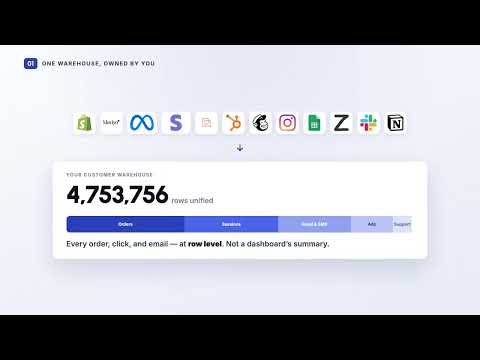
Your Shopify store holds purchase data. Klaviyo or Mailchimp holds engagement data. Google Analytics tracks behavioral data. Your ad platforms hold performance data. And all of these systems are speaking different languages, sitting in different dashboards, owned by different people on your team.

What you end up with is a collection of partial pictures, each one technically accurate, none of them complete. Your email team makes decisions based on what they can see. Your paid media team optimizes in their own silo. And your overall marketing strategy becomes a patchwork of isolated channel decisions rather than a unified, customer-informed approach.
Data enrichment solves this by connecting those dots. It pulls information across sources, layers in new dimensions of understanding, and creates a single, comprehensive view that the entire team can work from.
Why Marketing Teams Should Care (A Lot)
If you're on a marketing team, especially if you're responsible for driving revenue, data enrichment isn't a nice-to-have. It's infrastructure. Here's why.
You Stop Talking to Segments and Start Talking to People
Traditional segmentation is better than nothing, but it's still pretty blunt. "Women aged 25-34 who purchased in the last 90 days" tells you almost nothing about motivation. Why did she buy? What problem was she solving? What would make her come back?
Enriched data, particularly when it includes psychographic and behavioral layers, lets you move from demographic buckets to actual human understanding. You can craft messaging that speaks to the reason behind the purchase, not just the demographic profile of the purchaser. The result is communication that feels relevant, not random.
Your Campaigns Get Smarter Before They Launch
One of the most expensive habits in e-commerce marketing is launching campaigns based on assumptions and then waiting for the data to tell you what worked. The feedback loop is slow, the cost of being wrong is real, and by the time you've optimized, you've already burned through budget and time.
With enriched data, you're front-loading intelligence into the campaign planning process. You already know which customer profiles respond to urgency versus aspiration. You already know which product categories drive repeat behavior in which segments. You're not guessing. You're building on a foundation of understanding.

That doesn't mean every campaign will be a home run. But it does mean your starting point is dramatically better, your iterations are faster, and your floor is higher.
Attribution Becomes Less of a Nightmare
Ask any marketer what keeps them up at night and attribution is almost always in the top three. Multi-touch, cross-channel customer journeys make it incredibly difficult to understand what's actually driving revenue.
Enriched data doesn't magically solve attribution (nothing does, fully), but it gives you a much richer lens for understanding it. When you can see how a customer interacted with your brand across multiple touchpoints, what content they engaged with, what motivated their purchase, and how that maps to their psychographic profile, you start to see patterns that channel-level data alone will never reveal.
What Data Enrichment Means for Revenue Growth
Let's get specific about the revenue implications, because this is where the conversation really matters.
Higher Customer Lifetime Value
When you understand your customers at a deeper level, you can engage them more effectively at every stage of their lifecycle. Better onboarding sequences. More relevant product recommendations. Smarter win-back campaigns. Each of these touchpoints, informed by enriched data, incrementally increases the total value of each customer relationship.
This isn't theoretical. Brands that invest in understanding their customers beyond surface-level data consistently see longer retention, higher repeat purchase rates, and larger average order values. The math is simple: better understanding leads to better communication, which leads to more revenue per customer over time.
More Efficient Ad Spend
If you're running paid media (and you almost certainly are), enriched data changes how you think about targeting and creative. Instead of broad audience targeting and hoping the algorithm figures it out, you can build audiences informed by your deepest customer intelligence. You can create ad creative that speaks to proven motivational drivers. You can allocate spend toward the customer profiles that generate the most long-term value, not just the cheapest conversions.
The result is a lower customer acquisition cost and a higher return on ad spend, not because you found a clever hack, but because you're making fundamentally better-informed decisions.
Faster, More Confident Decision-Making
This one's underrated. One of the biggest hidden costs in marketing is the time spent debating what to do, second-guessing strategy, and running tests to validate what you could have already known. Enriched data compresses that cycle. It gives your team a shared, trusted foundation of customer intelligence to build from.
When your brand identity is clearly defined, your customer personas are built on real behavioral and psychographic data, and your performance metrics are connected to a complete picture, decisions come faster. And faster decisions, made with confidence, compound into a meaningful growth advantage over time.
The Enrichment Gap: Where Most Brands Fall Short
So if data enrichment is so powerful, why aren't more brands doing it well? A few reasons.
It's technically complex. Connecting data across platforms, normalizing it, enriching it with new dimensions, and making it accessible to a marketing team (not just a data engineering team) is hard. Most brands don't have the infrastructure or the headcount to build this in-house.
It requires ongoing investment. Enrichment isn't a one-time project. Customer behavior changes, new data sources emerge, and the competitive landscape shifts. The brands that benefit from enriched data are the ones that treat it as a living system, not a quarterly initiative.
The tools haven't historically been accessible. Until recently, the kind of deep data enrichment we're talking about (psychographic profiling, AI-driven behavioral analysis, cross-platform data unification) was the domain of enterprise brands with seven-figure martech budgets. That's changing, quickly, but many mid-market brands still don't realize what's now possible.
A New Approach to Data Ownership and Enrichment
We believe that your customer data should live in a dedicated environment that belongs to you, not scattered across third-party platforms where you're renting access to your own intelligence. That's why every AccessFuel customer gets their own Golden Database: a centralized, AI-enriched data warehouse that pulls from your Shopify store, your email platform, your analytics, and your ad accounts, and then layers on the kind of deep enrichment that actually makes the data useful.

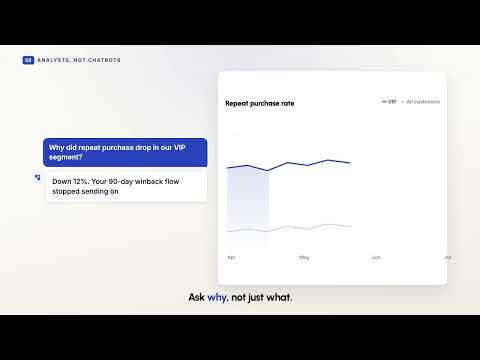
We're talking about AI-generated customer personas built on psychographic and behavioral analysis, not just demographics. We're talking about Brand DNA, a system that codifies your brand's identity, voice, and positioning so that every piece of marketing you create is rooted in who you actually are. And we're talking about a conversational AI layer, AIRA, that lets your team actually interact with all of this intelligence in plain language, so you don't need a data analyst on speed dial to answer a strategic question.
The point isn't the technology for its own sake. The point is that when your data is enriched, centralized, and genuinely accessible, your marketing team operates at a completely different level. Campaigns become more targeted. Creative becomes more resonant. Decisions become faster and more informed. And revenue grows, not because you're spending more, but because you're spending smarter.
Where to Start
If you're reading this and thinking, "We're definitely in the fragmented, surface-level data camp," here's the good news: you don't have to boil the ocean.
Start by honestly assessing what you actually know about your customers versus what you assume. Look at how many platforms your data lives across and how much of it you can access in a unified way. Ask your team how often they make campaign decisions based on gut feeling versus genuine customer intelligence.
Those questions alone will reveal the gaps. And once you see the gaps, the path forward becomes a lot clearer.
Data enrichment isn't a trend and it isn't a buzzword. It's a foundational capability that separates brands that scale from brands that plateau. The data you need is probably already out there. It just needs to be connected, deepened, and made useful.
And that's a problem worth solving.
AccessFuel is an AI-powered e-commerce marketing platform that helps Shopify brands centralize, enrich, and activate their customer data. If you're ready to see what enriched data can do for your marketing, start your free trial and experience it firsthand.
Related posts
Keep Exploring
Discover more insights, strategies, and updates from AccessFuel.
4 min read
Data & AnalyticsIs Ecommerce Analytics Consulting Worth It, or Are You Buying a Deck That Goes Stale?
Consulting is worth it when the work is genuinely one-time, and stops being worth it the moment you need the same answer next month. An honest three-way comparison.
4 min read
Customer IntelligenceWhy Does One Buyer Look Like Five People?
One customer, five systems, five different versions of her. Customer data integration is what turns those blind systems into one that can see, and getting it wrong breaks everything downstream.

4 min read
Customer IntelligenceCustomer Intelligence: Why Can't 30 Tools Answer One Simple Question?
Most ecommerce brands run 30 or more tools and still cannot say why repeat purchases dropped last month. Customer intelligence is the layer that closes the gap between them.